
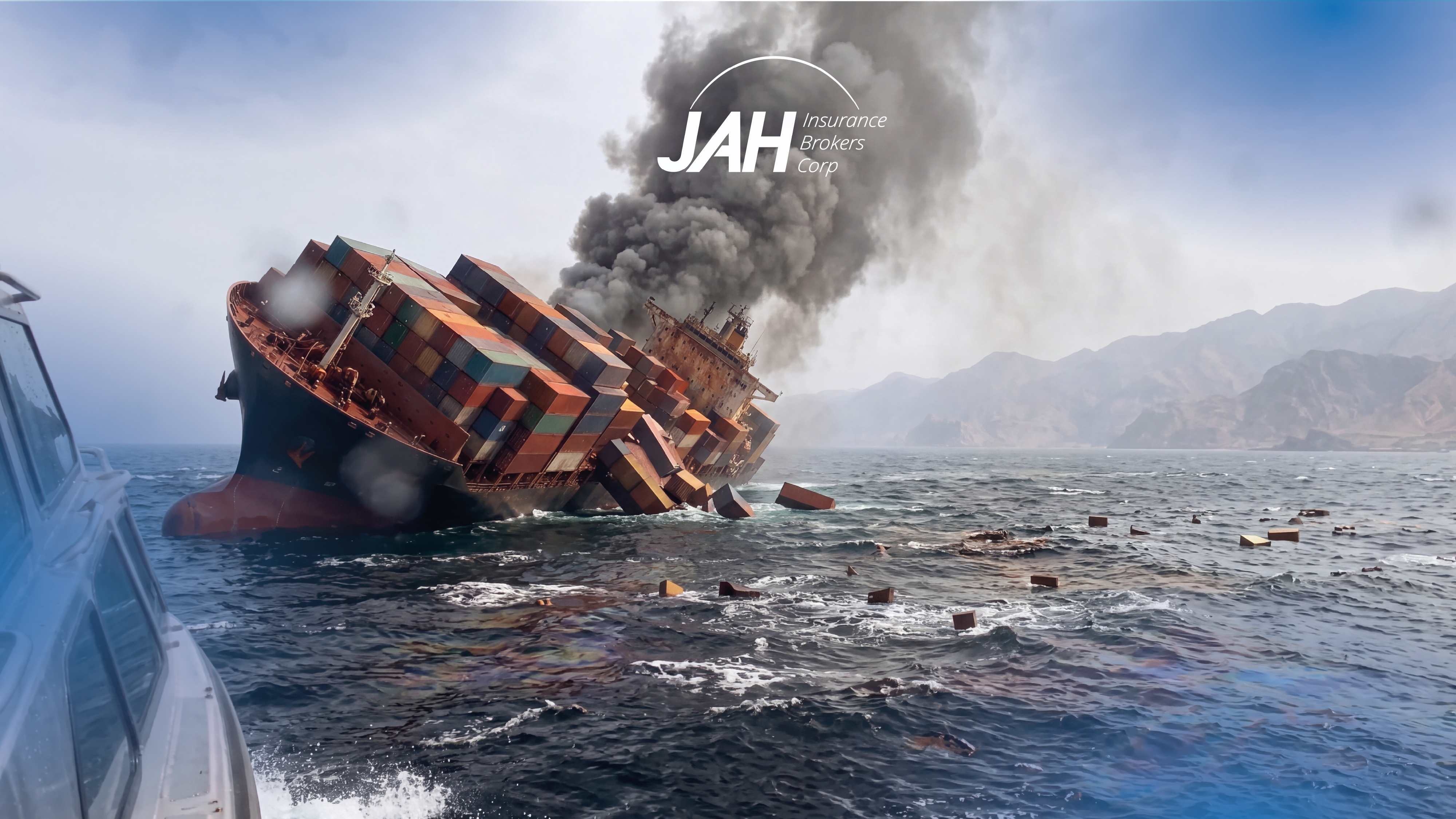
marine cargo insurance
Strait of Hormuz
Strait of Hormuz impact on global trade
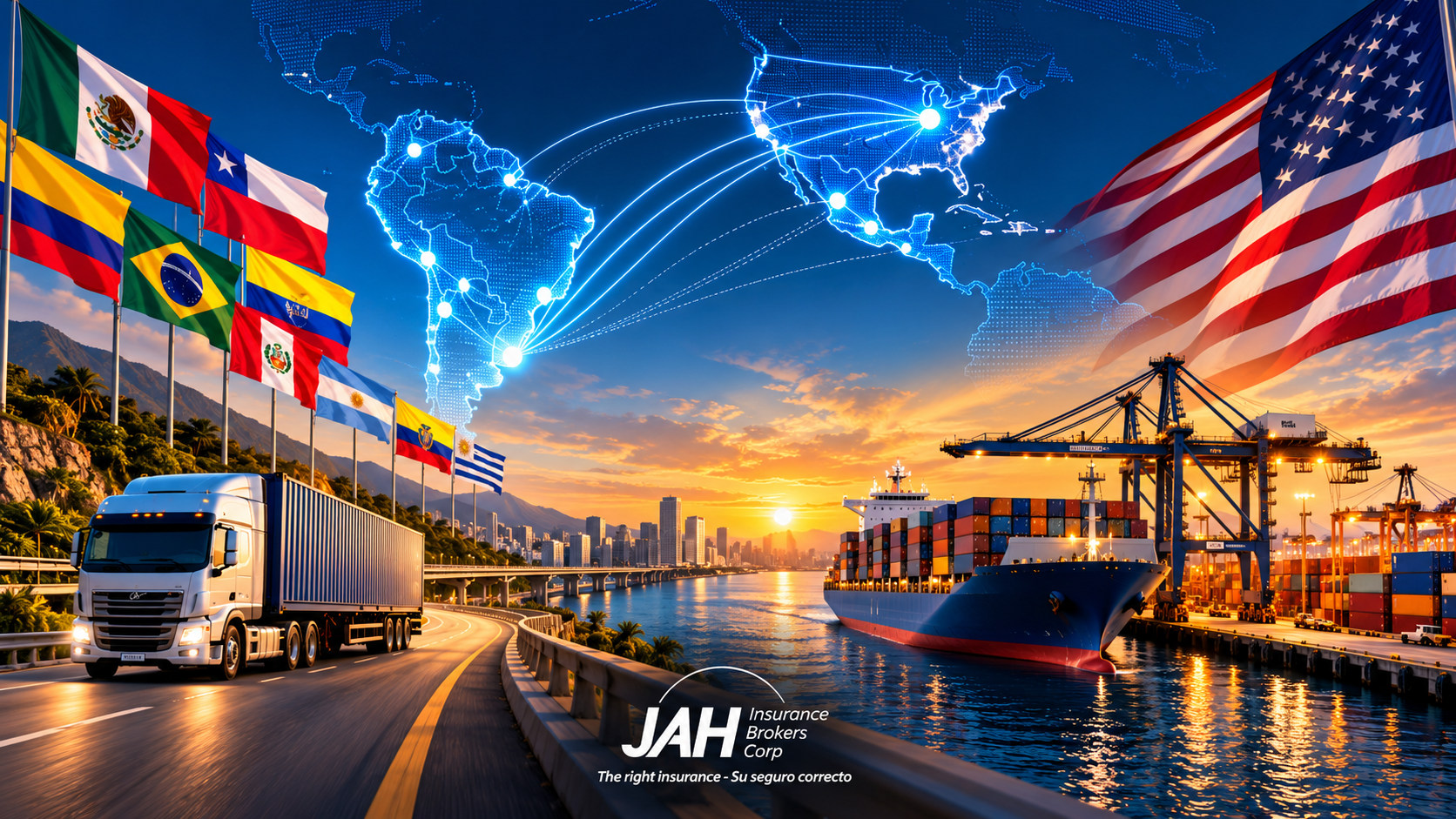

Goods shipped from Latin America to the United States may pass through various modes of transportation, carriers, ports, borders, and storage facilities before reaching their destination. Each transition creates a new risk. The problem is that many companies still view insurance solely in terms of the maritime or land leg of the journey.
A shipment may cross from Mexico into the United States by road or arrive from Colombia, Peru, or Ecuador by sea and continue by truck. Even if it is a single commercial transaction, each stage carries distinct risks.
The main challenge of the Latin America–U.S. routes is precisely their multimodal nature.
A shipment may involve overland transport in the country of origin, ocean or air freight, port handling, customs clearance, temporary storage, and then overland transport again in the United States.
Each stage may be subject to different conditions.
A container may be damaged during port operations. A shipment may be stolen during a land leg of the journey. Equipment may be damaged during handling. And goods that show no damage during ocean transport may be involved in an accident during the final kilometers to the customer.
Therefore, insuring only the leg that seems most important may leave out precisely the point where the loss occurs.
The JAH article on the LATAM–U.S. trade routes highlights this characteristic as one of the key factors that distinguish these corridors from other transportation operations. A single shipment may be subject to different liability regimes throughout its journey.
Mexico is one of the United States’ main trading partners, and trade between the two countries relies heavily on cross-border land transport.
But crossing the border does not mean the risk disappears.
The cargo may pass through various carriers, yards, logistics centers, and transfer points before reaching its destination. Furthermore, certain corridors are highly vulnerable to cargo theft.
This requires analyzing the operation as a complete chain.
Origin → ground transportation → border → transportation in the U.S. → storage → final delivery.
If the policy covers only part of that route, the company may discover too late that there is a gap in coverage.
This is probably one of the most common sources of confusion among importers and exporters.
The fact that the carrier has legal liability for the goods does not mean that liability equals the actual value of the cargo.
In international maritime transport to or from the United States, for example, the application of COGSA may limit the carrier’s liability to $500 per package or unit of freight, under the conditions set forth by the applicable regime. For inland transportation within the United States, the Carmack Amendment establishes a different liability structure, which may be linked to the declared value and the terms applicable to the shipment.
The difference can be significant.
Let’s imagine a shipment with a commercial value of USD 200,000.
If that cargo is lost during a leg of the journey subject to a liability limitation, the recovery from the carrier could be far less than the actual value of the shipment.
This is where cargo insurance comes into play.
Insurance does not replace the carrier’s liability. It protects the economic interests of the cargo owner against the risks covered by the policy.
These are two different mechanisms that serve different purposes.
Not all goods require exactly the same coverage structure.
A company that transports high-value electronic components faces a different level of risk than a company that transports steel, machinery, or goods with a low unit value.
International cargo insurance terms are typically structured around different levels of coverage.
| Coverage | What It Covers | What type of operation is it suitable for? |
|---|---|---|
| ICC A | Comprehensive coverage against loss or physical damage, subject to exclusions | High-value goods, electronics, pharmaceuticals, perishables, and sensitive cargo |
| ICC B | Specifically named risks | Certain industrial cargo and goods with moderate risk exposure |
| ICC C | More limited coverage against major events | Transactions where the nature and value of the cargo allow for more restricted coverage |
| Open Cargo Policy | Automatic coverage for shipments that meet the policy conditions | Companies with frequent and recurring operations |
Your choice shouldn’t be based solely on price.
You should consider what you’re shipping, its value, the route it takes, how many carriers are involved, and the consequences of a loss.
An import from Mexico to Texas might start at the supplier’s facility, cross the border by road, and end at a distribution center. In contrast, a shipment from Colombia might arrive by sea in Miami and continue by truck to Atlanta.
Although both operations connect Latin America with the United States, each involves different routes, carriers, and risks. Therefore, the insurance analysis must cover the entire journey, not just the international leg or the primary mode of transportation.
Warehouse-to-warehousecoverage can protect the goods from the agreed-upon origin to the agreed-upon destination, always within the terms, conditions, and timeframes of the policy. The key is to verify how that protection is maintained during changes in transportation, handoffs between carriers, and scheduled handling stages—without assuming that all of these are automatically covered.
Transfer points can be overlooked when planning insurance, even though they are part of the cargo’s route. Unloading at a port, transfer from a ship to a truck, transport between a terminal and a warehouse, transshipments, border crossings, and delivery to another carrier all require specific review.
At each of these stages, it is important to answer two questions:
1. Who is responsible for the goods?
2. What coverage applies if a loss or damage occurs?
The answer is not always obvious, especially when multiple operators are involved, each with different terms and limits of liability. Therefore, a well-structured cargo insurance policy must account for anticipated transfers and specify the scope of coverage, without relying solely on what can be claimed from each participant in the supply chain.
It’s not just about large importers. On the Latin America–U.S. routes, the following parties can benefit from an appropriate insurance structure:
U.S. importers who purchase goods in Latin America and need to protect them throughout the entire journey.
Latin American exporters who sell under terms that maintain their insurable interest during part of the transit.
Freight forwarders, NVOCCs, and logistics operators who need contingent coverage structures or master policies for specific operations.
Companies that use trade finance, especially when a bank or a letter of credit requires proof of insurance.
The JAH article specifically identifies these four profiles as groups with particular needs within these corridors.
A company that imports once a year can structure a specific policy for each transaction.
But the situation is different for a company that receives goods from Latin America every week.
In these cases ,an Open Cargo Policymay make sense , as it allows for annual coverage of shipments that meet the agreed-upon conditions, rather than managing a separate policy for each shipment.
This not only simplifies administration.
It also allows the insurance strategy to be integrated into the day-to-day operations of the supply chain.
Before purchasing or renewing a policy, a company should be able to clearly answer:
Where does the coverage begin?
It does not necessarily coincide with the moment the goods are loaded onto the ship or truck.
Where does it end?
The final destination may be hundreds of kilometers beyond the port of entry into the United States.
What happens when the mode of transportation changes?
Coverage must be analyzed for the entire multimodal operation.
What is the actual value of the goods?
The value of the cargo should not be confused with the carrier’s liability limits.
What happens if an incident occurs at a transfer point?
The policy must be reviewed to determine how it covers storage, handling, transshipments, and other stages involved.
Purchasing insurance based solely on the type of goods, without analyzing how they will reach their destination, may leave certain stages of the operation without the necessary protection.
To structure the coverage, it is essential to know the entire route, identify the risks for each leg, and determine the insurable value of the cargo. With this information, the policy terms can be defined and its scope reviewed in light of the planned transport, transfers, and storage.
On routes between Latin America and the U.S., this analysis is particularly important: a single shipment may pass through different jurisdictions, modes of transportation, and operators. A policy that does not account for these specifics may seem adequate until a loss occurs at a stage that was excluded from the contracted coverage.
Trade routes between Latin America and the United States connect importers, exporters, and logistics operators through multi-stage supply chains. This complexity can make it difficult to identify when a loss occurred and who is liable for it.
The fact that the goods are in the hands of a carrier, a port terminal, or a warehouse does not mean that these parties assume full economic liability for them. Anyone with an insurable interest in the cargo needs protection that does not depend exclusively on the liability of each individual operator.
Therefore, cargo insurance must be structured as specific protection for that economic interest throughout the entire journey, in accordance with the policy’s coverage, limits, and conditions.
is not:
“Does the carrier have insurance?”
It is:
“If my cargo is lost tomorrow, what coverage do I have to recover its actual value?”
The answer should take into account the entire route, the different modes of transportation, the transfer points, the value of the cargo, and the specific terms of the policy.
In a LATAM–U.S. shipment, insuring only the ocean leg or relying exclusively on the carrier’s liability can result in a significant gap between the value of the goods and what can actually be recovered.
And that difference can turn into a loss that the company will have to bear directly.
Trade between Latin America and the United States will continue to grow, and with it, the need to connect ports, highways, borders, and distribution centers.
Logistical efficiency isn’t just about moving cargo faster.
It’s also about knowing what happens when something goes wrong.
For an importer or exporter, having the right insurance policy means that risk analysis doesn’t end when the goods leave the port or when they cross a border.
Protection must follow the cargo along its actual route.
Brújula Logística | JAH Insurance Brokers Corp.
Coverage, limits, deductibles, exclusions, and applicable conditions depend on the policy purchased and the specific characteristics of each transaction.