
Imports
Marine cargo
Exports

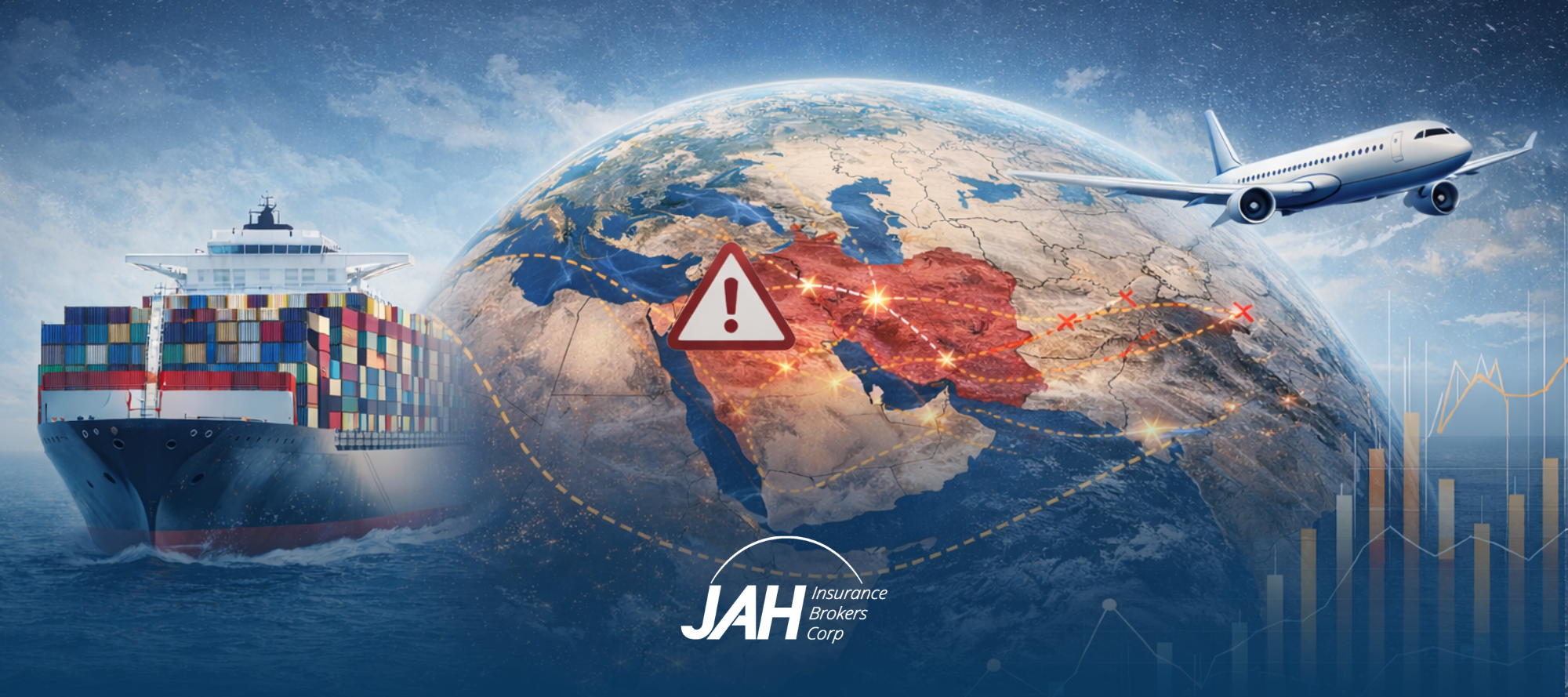
The past few days have seen a significant escalation of tensions between the United States, Israel and Iran, marking one of the most acute geopolitical crises of the year so far. This situation has transcended the military realm to directly impact air transport, shipping lanes and global supply chains. Although events continue to evolve, there are facts confirmed by multiple international media that are already affecting global logistics.
Aviation Crisis: Airspace Closures and Cancellations
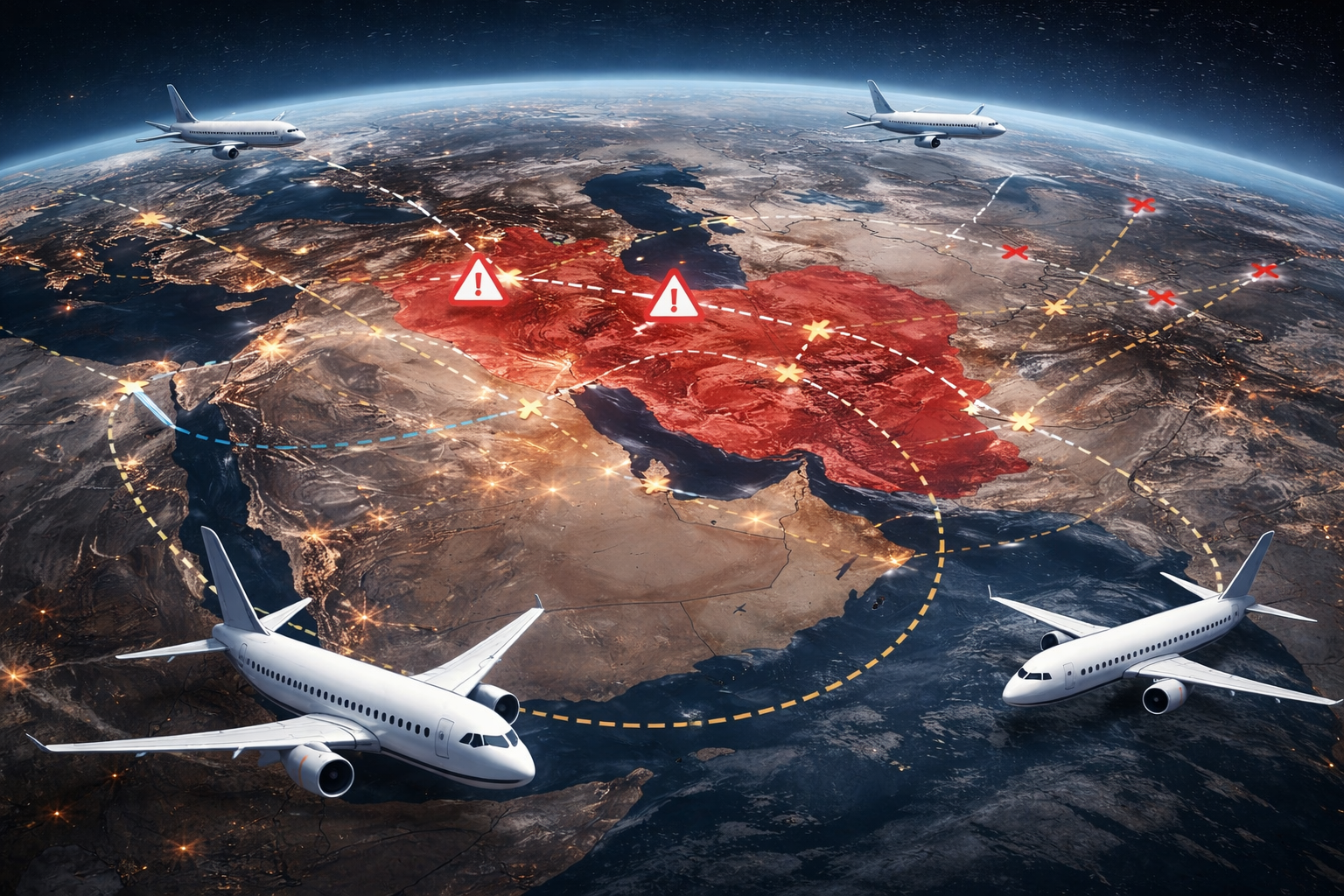
The impact of the military escalation between the United States, Israel and Iran immediately translates into one of the biggest aviation disruptions in recent times. Decisions to close airspace and suspend operations at globally relevant hubs have generated a chain reaction affecting both passenger and cargo transportation.
Strategic Route Closures
The military offensive and subsequent retaliation led to the total or partial closure of the airspace of several Middle Eastern countries, including Iran, Iraq, Kuwait, Bahrain, Qatar and the United Arab Emirates. This led to the suspension of operations at key airports that function as transcontinental hubs for routes between Europe, Asia and Africa.
Key facts:
- Dubai, Abu Dhabi and Doha airports, three of the world's most important air hubs, experienced partial or total airspace closures on the most critical days.
- On one day alone, more than 3 400 canceled flights were reported, according to data from tracking platforms such as FlightRadar24 and FlightAware.
- These hubs typically move around 90 000 passengers a day between Emirates, Qatar Airways and Etihad alone.
The temporary closure of these air corridors disrupts traffic between intercontinental markets, forcing logistics operators to rethink routes and adjust schedules on the fly.
Cancellations and Diversions
The disruption of airspace and suspension of operations has had measurable effects on global mobility:
- In a single day , more than 2 800 flights were canceled between airports in the Middle East and other international destinations.
- On average, more than 19,000 flights were delayed at airports around the world as a direct result of the regional disruptions.
- The region's major airlines - Emirates, Qatar Airways and Etihad -suspended their routes to and from their main hubs, affecting tens of thousands of passengers.
In addition to cancellations, there have been lengthy diversions, with aircraft having to change course or return to their points of origin due to the closure of access routes, complicating the logistics of crews, equipment and bookings.
At some international airports outside the Middle East, such as Mumbai (India), more than 50 flights were cancelled in a single day due to instructions from the authorities and reorganization of routes.
2. Impact on Global Supply Chains
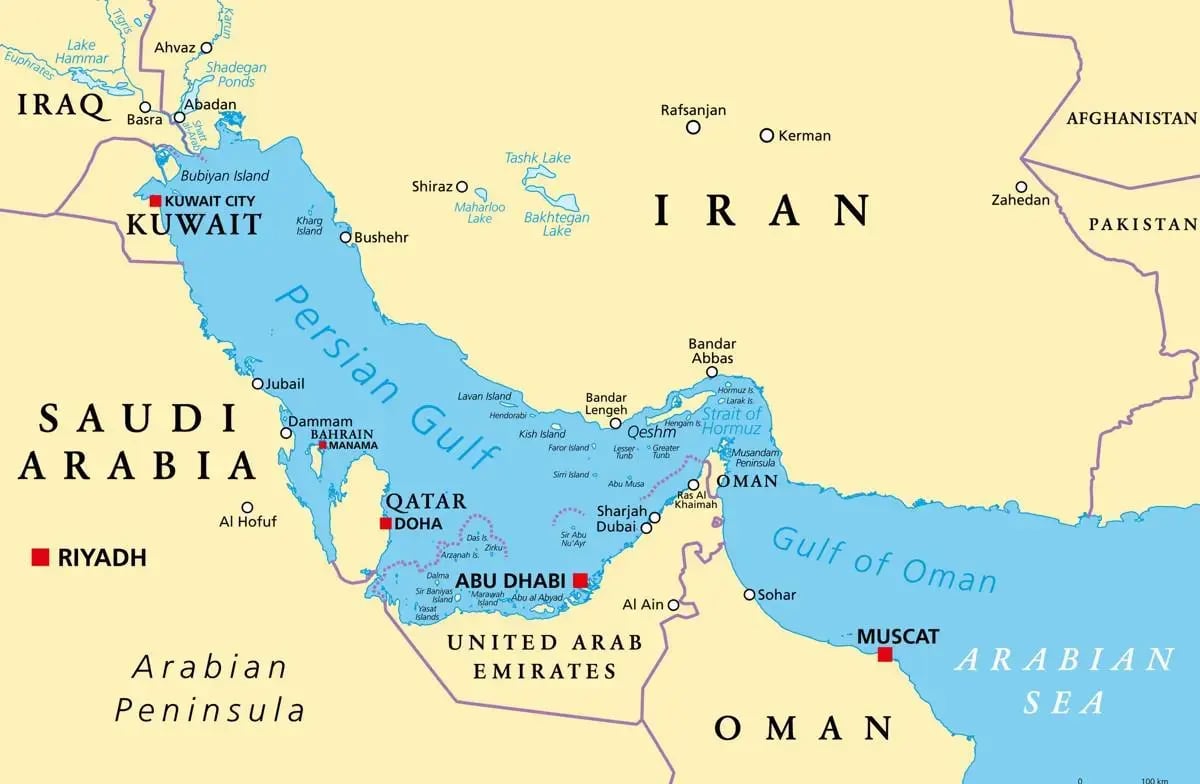 The Strait of Hormuz, which connects the Persian Gulf with the Gulf of Oman, is located between Iran and the Sultanate of Oman. Source: PeterHermesFurian / iStock.
The Strait of Hormuz, through which about 20% of the world's oil transits, has once again become a critical point in the face of the escalating conflict. Although there has not been a total closure, the perception of risk has been enough to reduce operations, raise security alerts and modify transit plans.
This route is not only key for the transportation of hydrocarbons, but also for the movement of goods in container ships, so its instability has a direct impact on international maritime trade and logistics operations related to energy, industrial goods and consumer goods.
Disruptions in Maritime and Air Transport
As a direct effect of the crisis, several shipping lines have opted todivert vessels away from the Persian Gulf, prioritizing safety over efficiency. These diversions involve longer transit times and additional operating costs.
In parallel, airfreight capacity has been reduced due to airspace closures and flight cancellations, which has led to pressure on tariffs, lower availability and delivery delays, especially for urgent or high-value goods. Even e-commerce platforms have begun to report delays in shipments to and from the region.
3. Economic and Energy Price Effects
Oil and Energy
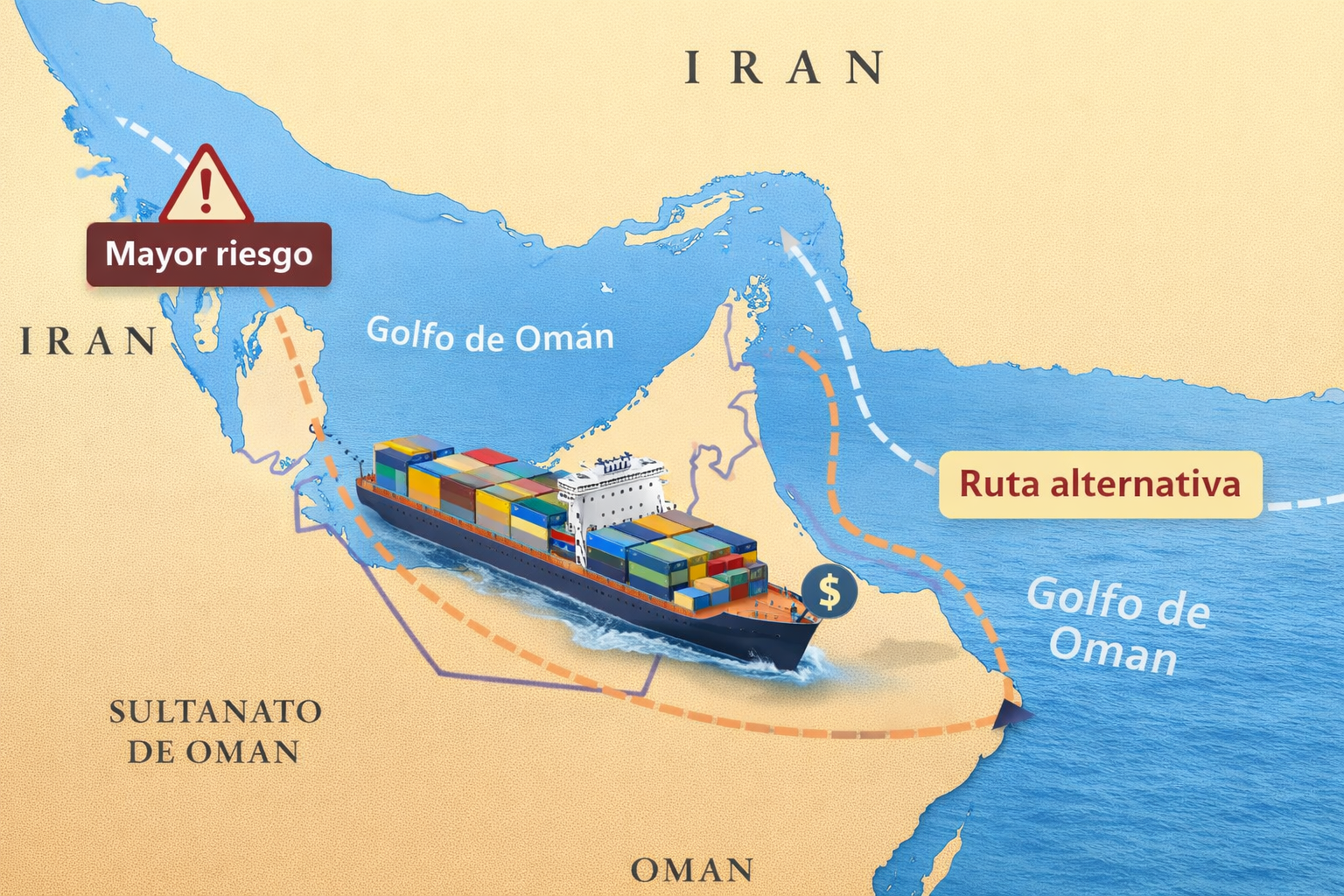 Illustration of logistical diversions in the Strait of Hormuz and the Gulf of Oman.
The conflict has triggered:
- Increases in global oil and gas prices.
- Expectations of lasting volatility in energy markets, given the risk on crude oil shipments.
The escalation of tensions in the Middle East has had an immediate impact on energy markets, especially on oil and gas prices, due to the strategic weight of the region in global hydrocarbon production and transit. Since the beginning of the conflict, the markets have reacted with rises and increased volatility, reflecting the perceived risk to the continuity of supply.
A key point of attention is the Strait of Hormuz, through which some 20% of the world's oil flows. Although there has not been a total disruption, the mere threat of restrictions or incidents raises the costs of operation, insurance and risk coverage, and has led some companies to consider alternative routes or preventive measures.
This scenario has a knock-on effect on international logistics. The rising cost of fuel directly impacts air and maritime transportation, putting pressure on freight rates and fuel surcharges, especially on longer routes due to geopolitical detours.
Beyond the spot price of crude oil, the biggest challenge for companies is operational uncertainty. Volatility makes it difficult to plan costs, negotiate logistics contracts and manage inventories, forcing importers, exporters and logistics operators to reinforce strategies for flexibility, route diversification and risk management.
What does this mean for international logistics?
The escalation of tensions in the Middle East represents not only a high-intensity geopolitical episode, but also a structural disruption factor for international logistics. In a highly interconnected global system dependent on specific corridors, any disruption in key areas generates immediate and, in some cases, prolonged effects.
Immediate Operational Risks
One of the first observable impacts is the generalized increase in logistics costs. Rising fuel prices, coupled with higher insurance premiums associated with geopolitical risks, put upward pressure on air and sea freight rates. These additional costs are usually passed on, partially or totally, to exporters and importers, affecting margins and competitiveness.
This is compounded by the need to divert traditional routes to avoid high-risk areas. These detours, by air or sea, involve longer distances, higher fuel consumption and extended transit times. In time-sensitive sectors - such as pharmaceuticals, perishables, electronics or spare parts - these delays can cause significant disruptions in the supply chain.
Another critical factor is the restriction of operational capacity. The closure of airspace, the suspension of flights and the reduction of stopovers at strategic hubs reduce the availability of routes and services. On the maritime side, the decision by some shipping lines to avoid certain areas reduces the supply of transport and increases pressure on prices and availability.
Impact on planning and decision making
Beyond the immediate effects, the biggest challenge for international logistics is uncertainty. Geopolitical volatility makes it difficult to plan medium-term operations, forces the revision of logistics contracts, and requires more active risk management.
Companies with global supply chains are beginning to prioritize:
- Greater diversification of routes and suppliers.
- Review of inventory levels to mitigate potential disruptions.
- More rigorous evaluation of insurance coverage and clauses related to geopolitical events.
In this context, logistics is no longer a purely operational component, but a strategic factor in corporate decision making.
Conclusion
The escalation between the United States, Israel and Iran has triggered, in a matter of days, a global logistics crisis, the effects of which are already being felt at multiple levels of international trade.
Commercial and cargo aviation is facing one of its greatest recent disruptions, with airspace closures, mass cancellations and forced diversions affecting connectivity between Europe, Asia and Africa. At the same time, maritime and air supply chains are being reconfigured, forced to adapt to an environment of increased operational risk, rising costs and reduced predictability.
This scenario is amplified by the reaction of the energy and financial markets, which reflect the uncertainty through price increases and sustained volatility, with a direct impact on logistics costs and the global economy.
Overall, the situation reinforces a reality already known to the industry: in an interdependent world, regional conflicts have global consequences. For logistics operators, shippers, exporters and importers, the current context calls for proactive planning, operational flexibility and comprehensive risk management as key elements to sustain the continuity of international trade.
Sources:
- Reuters, special reports on flight suspensions and airspace closures in the Middle East (2026).
- Associated Press (AP), international coverage of aviation and global trade disruptions.
- U.S. Energy Information Administration (EIA), analysis of the Strait of Hormuz as a critical point in world energy trade.
- International Air Transport Association (IATA), reports on geopolitical impact on international air routes.
- UNCTAD, Review of Maritime Transport, structural analysis of global maritime trade.
- Financial Times, economic and geopolitical analysis on risks to international trade.
-1.jpg?width=4000&height=1852&name=banners%20mail%20radica%20tu%20PQRS%20(3)-1.jpg)